Are you eyeing a West Town two-flat as your next cash flow play? You are not alone. Investors love this pocket of central Chicago for quick commutes, lively retail corridors, and steady renter demand. In this guide, you will learn how to underwrite deals, what building types to expect, the zoning rules that matter, the renovations that move rents, and the local legal items you cannot skip. Let’s dive in.
Why West Town works for investors
West Town sits near downtown with strong transit and walkable amenities. That keeps leasing velocity healthy and vacancies in check. According to Zumper’s neighborhood rent data, current medians hover around Studio ≈ $2,050, 1-bed ≈ $2,400, and 2-bed ≈ $2,700. These are neighborhood-level context figures. Always confirm with recent signed leases and active comps by unit type and finish level.
Rents here typically land higher than many near-west neighborhoods that are farther from the core, but lower than the most premium central submarkets like the West Loop and River North. That positioning affects achievable rent ceilings and the cap rate you should expect. Also account for new construction near the West Loop that can compete for tenants with amenity-rich product. Property-level supply checks should be part of your underwriting.
What you will buy: common two-flats
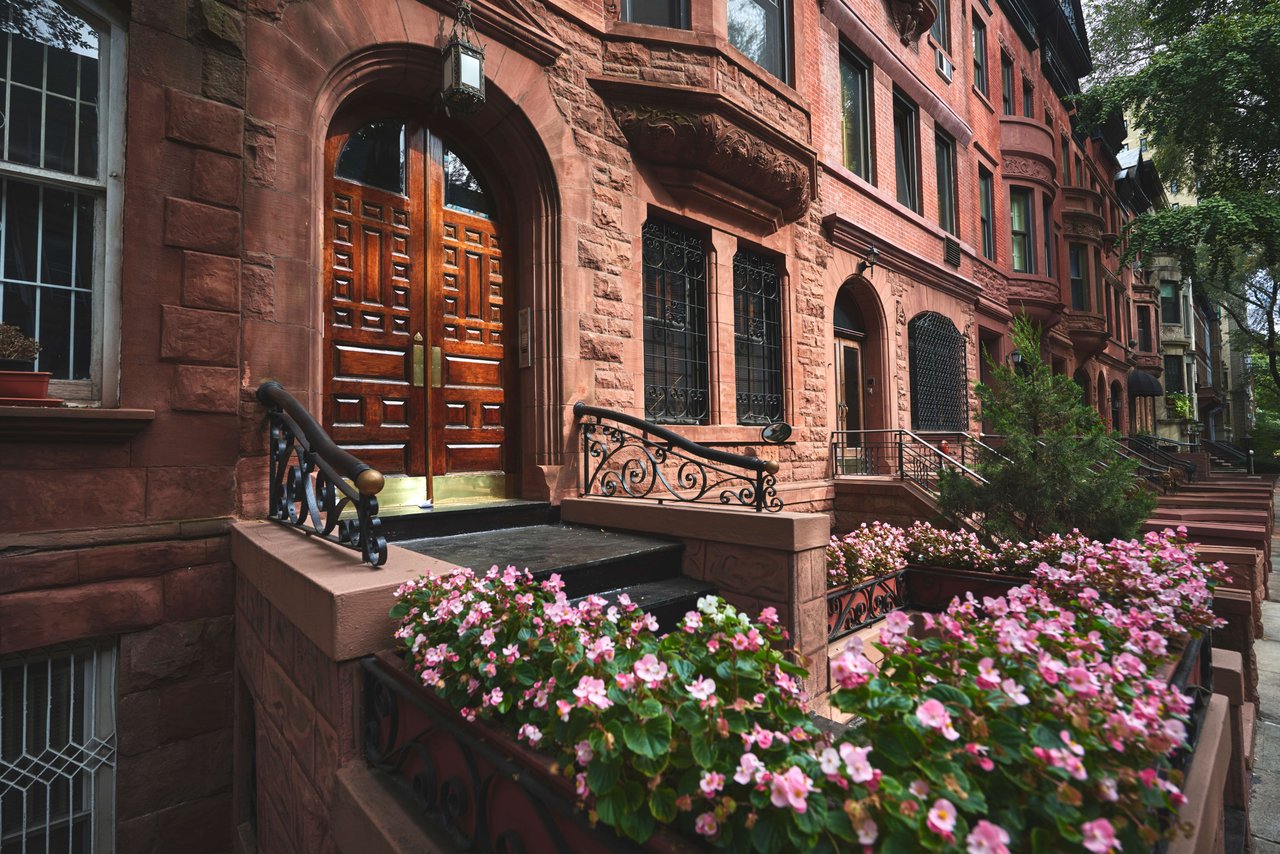
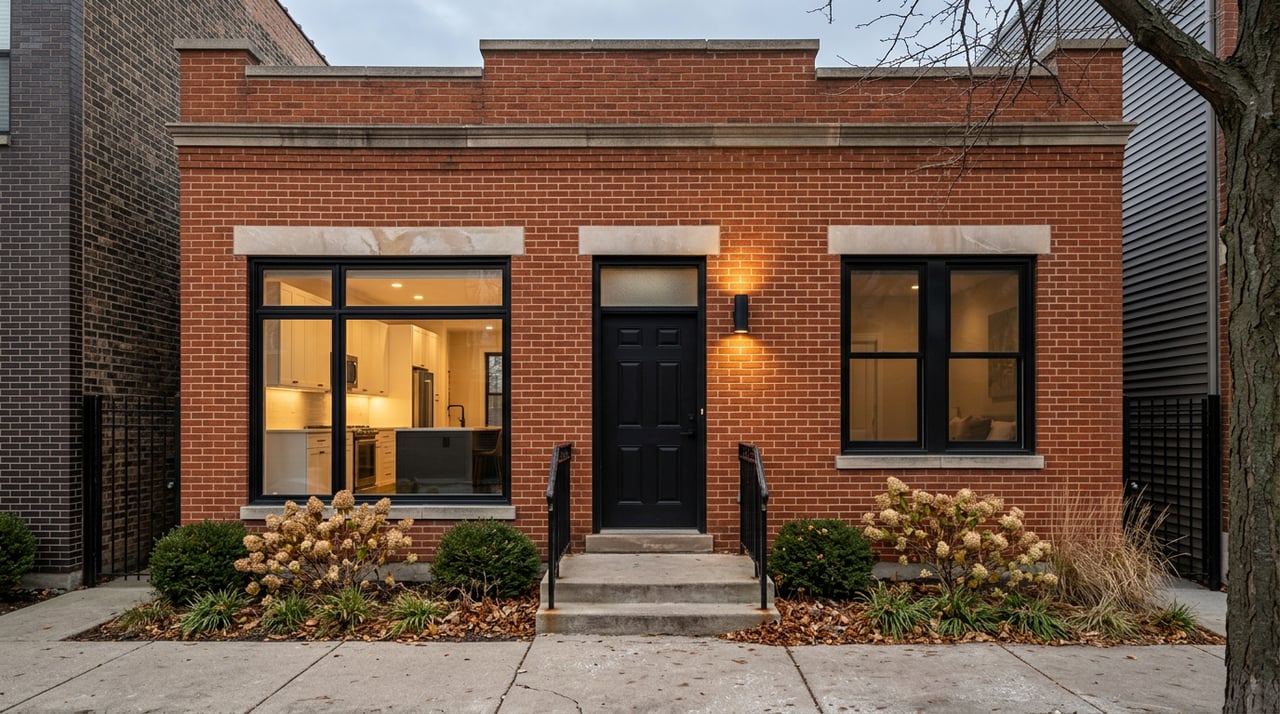
Most West Town two-flats are classic stacked buildings with one full-floor unit per level. Floor plans often mirror, and you will see 1 to 3 bedrooms per unit. Side-by-side conversions and garden or basement units also show up and can boost income if they are legal and permitted.
Older buildings often share a masonry envelope, exterior porches, and a basement with mechanicals. Expect older boilers or hot-water systems in some stock. For a practical primer on layouts and building quirks, see this two-flat basics guide.
Zoning basics that shape your plan
Chicago’s residential zones fall into RS, RT, and RM categories. In practice, RT districts commonly allow two-flats and three-flats, while RM districts allow denser multifamily. RT-4, for example, often allows two- or three-flats subject to lot-area and bulk standards. Do not assume density or parking rules. Each parcel has specifics, and overlays can add requirements or demolition fees.
Confirm the exact zoning, overlays such as ARO or preservation, and any open violations before you write an offer. A fast way to research these items is to review a property’s profile on Chicago Cityscape and follow up with the city or a zoning attorney if needed.
Underwriting a West Town two-flat
Follow a simple, disciplined sequence so your offer reflects true performance:
Pull unit-level rent comps. Use 3 to 6 comps per bedroom count and match amenities and finish. As a starting point, West Town 2-bed medians are about $2,700 per month from Zumper’s local data. Prioritize recent signed leases over asks.
Build gross potential income. Sum all unit rents and annualize. Apply a market vacancy and concessions factor, often 4 to 8 percent depending on condition and competition.
Add other income only when supported. This might include parking or laundry. Be conservative without solid comps.
Estimate operating expenses. For older two-flats, many investors use a 35 to 45 percent operating expense ratio range on effective gross income. This bands within the common 30 to 50 percent range for small multifamily. See these operating expense benchmarks as a reference point.
Calculate NOI. Effective Gross Income minus Operating Expenses.
Select a market cap rate and back into value. Value is roughly NOI divided by cap rate. Cap-rate expectations vary by asset quality and submarket. Recent research indicates yields stabilized into late 2025, but local Chicago small-multifamily trades can diverge by condition and location. Review the CBRE U.S. Cap Rate Survey H2 2025 and cross-check with recent sales nearby.
Cross-check with GRM and price-per-unit comps. Where these diverge, re-validate each input.
Model debt and cash-on-cash. Use your lender’s rate and amortization to estimate annual debt service. Subtract from NOI to get pre-tax cash flow, then divide by your equity for cash-on-cash.
Quick example: 2-unit West Town two-flat
- Assumptions: Unit A 2-bed at $2,700 per month; Unit B 2-bed at $2,700 per month. Gross scheduled rent equals $64,800 per year.
- Apply 6 percent vacancy and concessions. Effective gross income is about $60,912. Add $600 in supported other income for parking or laundry to reach about $61,512 EGI.
- Use a 40 percent operating expense ratio. That is about $24,605 in expenses and about $36,907 in NOI.
- At a 5.5 percent cap rate, value is about $670,000. At a 6.5 percent cap rate, value is about $568,000. Use this sensitivity to set your walk-away number.
Two big cautions: owner-paid utilities and master-metered water can raise expenses fast, especially with a shared boiler. Also, verify Cook County property tax assessments and likely post-sale carry on the Cook County Treasurer portal.
Renovations that move rents
Target improvements that deliver clear renter value and code compliance:
- Kitchens and baths. Mid-range updates often create the strongest rent lift per dollar.
- In-unit laundry. This is a top renter priority and often justifies a premium.
- Private entries and outdoor space. Safe, well-lit porches and exterior stairs help leasing and reduce risk.
- Finished basements. Only if code compliant and permitted. Get clear on permitability and timing. Review the city’s guidelines for code-compliant basement units when evaluating this path.
Budget for common capex drivers on older brick buildings. These include roof work, porches and tuckpointing, boiler or system upgrades, and kitchen or bathroom refreshes per unit. Get bids during attorney review and carry a 10 to 20 percent contingency for surprises.
Inspections and legal checkpoints
A strong inspection process protects your cash flow and timeline:
- Building envelope. Roof age and condition, gutters, tuckpointing, porches and exterior stairs.
- Structure and moisture. Foundation cracks, water intrusion, basement flood history, sump and drain tile.
- Mechanical systems. Boiler or furnace age, hot-water heater capacity, distribution piping, and unit controls.
- Electrical. Panel capacity, obsolete wiring, presence of subpanels per unit.
- Utilities and metering. Confirm who pays each utility and count meters. Separate meters simplify management.
- Fire and life safety. Smoke and CO detectors, proper egress, and required fire separation.
- Legal unit status. Pull permit history and confirm Certificate of Occupancy for each unit.
Understand Chicago’s Residential Landlord and Tenant Ordinance. RLTO sets rules for lease terms, notices, late fees, entry, and especially security deposits. Penalties for missteps can be costly. Review the Illinois Legal Aid RLTO summary and confirm applicability for your situation. Provide required lead-based paint disclosures for pre-1978 housing and follow EPA RRP practices during renovations.
Operational red flags to avoid
- Unpermitted basement or internal conversions marketed as a “third unit.” These can create financing and insurance issues.
- Master-metered water or shared laundry with high owner-paid costs. Model utility lines from actual bills.
- A single shared boiler with no redundancy. Replacement or splits can be expensive and disruptive.
Your first 10 moves in West Town
- Pull fresh rent comps for each unit type and finish level.
- Confirm zoning and any overlays and review recent permits or violations through Chicago Cityscape.
- Order a full inspection that includes roof, porch, chimney, mechanicals, and code checks for basement units.
- Verify 12 to 24 months of utility bills and the current rent roll, leases, and deposit receipts.
- Build your pro forma with a conservative vacancy and an expense ratio within the 35 to 45 percent band.
- Price the deal using NOI divided by a locally supported cap rate and cross-check with GRM and per-unit comps.
- Request contractor bids for priority capex and carry a 10 to 20 percent contingency.
- Check likely post-sale taxes on the Cook County Treasurer portal.
- Align your loan terms with realistic DSCR and cash-on-cash targets.
- Plan tenant transitions that follow RLTO notice and documentation rules.
Work with a West Town specialist
If you want a crisp read on West Town rents, block-by-block dynamics, and which two-flats trade well, partner with an agent who works this corridor daily. With concierge-level support, fast underwriting help, and team and Christie’s distribution behind your listing, you can move from analysis to action with confidence. For a tailored West Town investment brief, connect with Luke Sandler.
FAQs
What cap rate should West Town two-flats pencil at today?
- Cap rates vary by condition and exact location. Use recent local small-multifamily sales to set a range, and cross-check with national context from CBRE’s H2 2025 survey while calibrating for West Town’s rent and risk profile.
How do West Town rents compare to nearby Chicago areas?
- West Town’s medians generally sit above many near-west neighborhoods farther from downtown and below top-tier central submarkets like the West Loop and River North. Always verify with current, unit-level comps.
Which Chicago zoning districts commonly allow two-flats?
- RT districts commonly allow two- and three-flats and RM districts allow denser multi-unit buildings. Exact density, open space, and parking rules are parcel-specific, so confirm the zoning and any overlays before you bid.
What operating expense ratio should I use for a two-flat?
- A conservative working range for older brick two-flats is often 35 to 45 percent of effective gross income. Adjust for owner-paid utilities, shared systems, and building condition.
Are basement units legal in West Town two-flats?
- Some are, some are not. Confirm permits and code compliance, including egress and fire separation. Treat unpermitted units as a legal and financing risk until proven otherwise.