If you are shopping for a condo in Near North Side, a rooftop deck can feel like the feature that seals the deal. In a neighborhood filled with high-rise living, shared outdoor space stands out because it adds room to relax, gather, and take in the city in a way your unit alone may not. The real value, though, comes from understanding what rooftop amenities actually include, how they are managed, and what they can mean for your monthly costs and resale. Let’s dive in.
Why rooftop amenities matter here
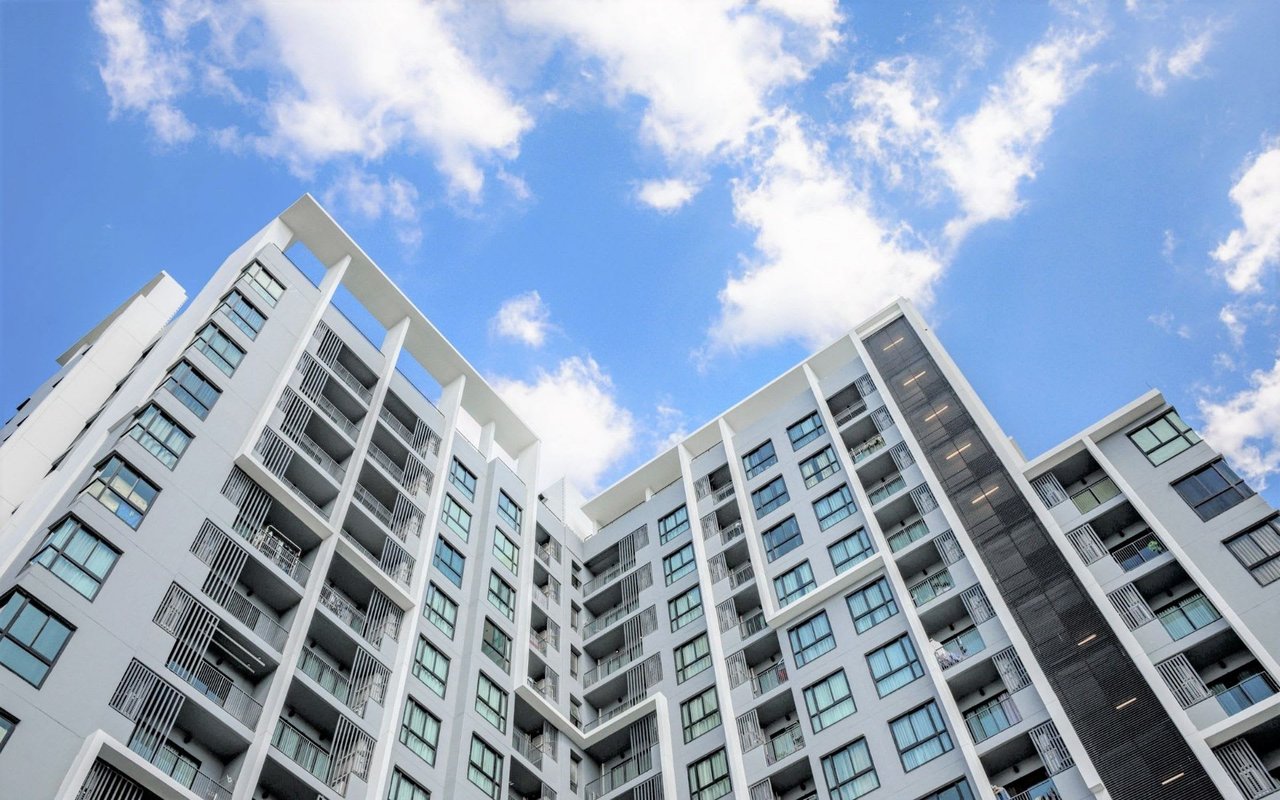
Near North Side is one of the most condo-heavy areas in Chicago. DePaul’s housing data shows condominiums made up 58.3% of the area’s housing units in 2024, and there were 2,563 condo sales compared with just 77 single-family sales.
That matters because dense condo living changes what buyers prioritize. In an area with many towers and limited private outdoor space, rooftop amenities often become one of the most visible ways a building creates a true lifestyle feature.
The neighborhood’s scale also supports that demand. CMAP’s 2025 snapshot estimates 104,712 residents and 66,227 households in Near North Side, while DePaul notes the area has the highest number of skyscrapers among downtown community areas.
What rooftop amenities usually include
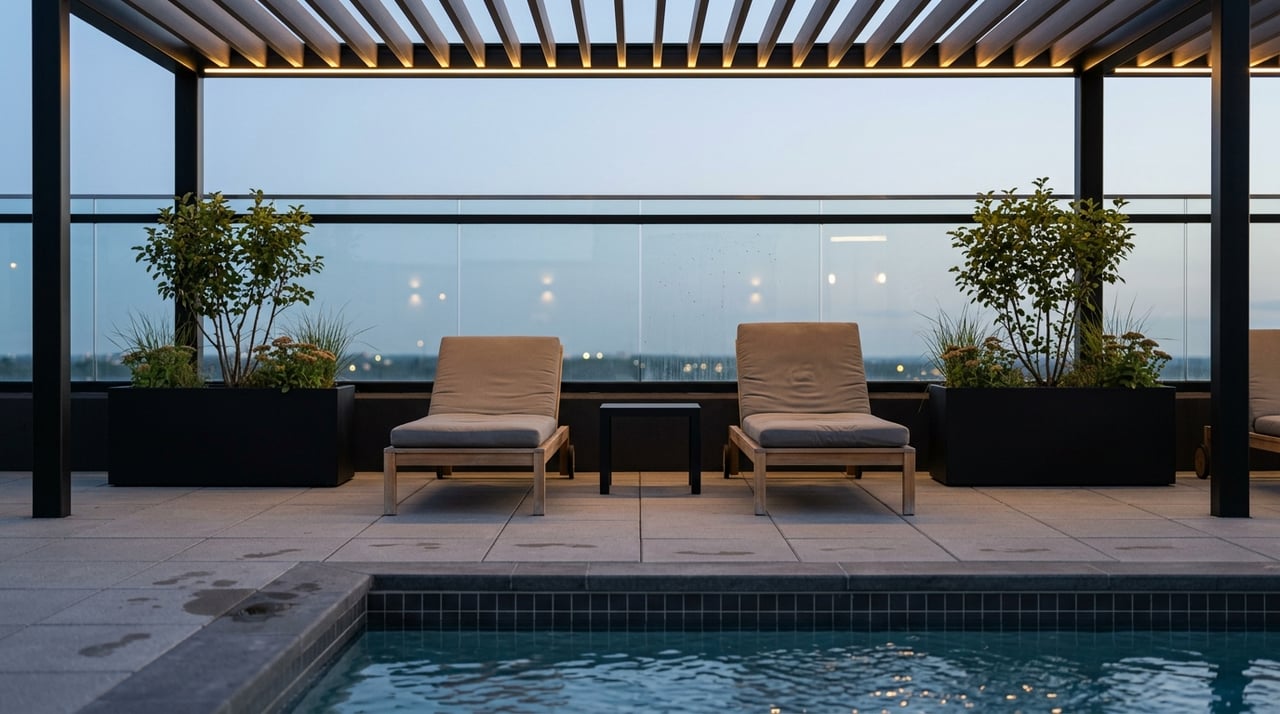
A rooftop amenity package is often much more than a simple open-air deck. In many Near North Side condo buildings, rooftop spaces are designed as shared extensions of the building’s living space.
You will often see features such as:
- Seating and lounge areas
- Grills or grilling stations
- Sundecks
- Skyline or 360-degree city views
- Fire pits
- Resident lounges tied to outdoor space
- Pool decks or pool-linked amenity areas
- Co-working or social spaces near the roof terrace
The common thread is convenience and usability. A rooftop space tends to feel more valuable when it is set up for actual daily use rather than just occasional views.
Near North Side examples buyers notice
Roof decks and sundecks
Some buildings highlight the rooftop itself as a central gathering place. Huron Street Lofts in River North describes its rooftop deck as a place for residents to gather, grill, relax, socialize, and enjoy skyline views, and it also promotes a rooftop sundeck with 360-degree city views.
That kind of setup speaks to what many buyers want in this part of Chicago. You are not just paying for access to the roof. You are often paying for a place that supports everyday downtime and casual entertaining.
Rooftop spaces with lifestyle amenities
Other buildings package the roof into a broader amenity plan. One Chicago includes a large roof garden on the podium, a 10th-floor amenity deck, roof terraces created by tower setbacks, resident lounges, co-working space, and rooftop terrace features like grills and fire pits.
In that type of building, the rooftop is part of a larger experience. It works alongside indoor gathering areas, wellness amenities, and flexible work space to create a more full-service feel.
Pool and deck combinations
Some condo buildings go one step further by linking rooftop or elevated outdoor space with pool access and entertainment areas. At 30 East Huron, the pool, deck, screening theater, and party space are presented as a connected amenity package.
For buyers, this can be a major draw. It can also raise important questions about long-term upkeep, reserve planning, and whether the monthly assessment matches how often you expect to use those features.
Why building rules matter
A rooftop deck may look relaxed in listing photos, but in real life it is usually governed closely. Shared amenity space has to work for many residents, so condo associations often create detailed rules around access and use.
Eliot House on North Sandburg Terrace offers a helpful example. Its published roof-deck rules include limited hours, weather-related closures, a 50-person occupancy cap, a no-smoking rule, a no-glass rule, and association-provided grills only.
That tells you something important as a buyer. A rooftop amenity is only as useful as the access you actually have, so it is smart to look beyond the marketing language and review how the space operates day to day.
Shared space versus limited common space
One of the most important questions is whether the rooftop area is a common element or a limited common element. Under the Illinois condominium handbook, the roof is commonly part of the common elements, while terraces and patios can be limited common elements.
That distinction can affect who uses the space and who helps pay for it. In some cases, condominium documents may allow certain expenses to be assessed only to the units that use a limited common element, if the condominium instruments provide for that.
For you as a buyer, this is not just legal language. It helps explain whether a terrace is truly private, semi-private, or part of a broader shared amenity system.
How rooftop amenities affect assessments
Rooftop amenities can add real appeal, but they also come with real costs. Under the Illinois Condominium Property Act, each owner pays a proportionate share of common expenses based on their ownership interest in the common elements, and boards must adopt budgets with reasonable reserves for capital expenditures and deferred maintenance.
The law also says boards should consider repair and replacement costs, useful life, reserve studies, the financial impact on owners, and the market value of the units when setting reserves. That matters because rooftop features are not one-time expenses.
A roof deck or rooftop pool may require ongoing work related to decking, waterproofing, railings, furniture, seasonal upkeep, and other infrastructure. The more elaborate the amenity package, the more important it becomes to understand how the building is planning for future maintenance.
What buyers should evaluate before making an offer
A rooftop amenity can absolutely add value to your lifestyle, but it should be evaluated with the same care as the unit itself. Near North Side had 2,563 condo sales in 2024, so buyers are often comparing multiple buildings with similar price points and very different amenity structures.
Before you move forward, look closely at these points:
- Access: Is the rooftop open year-round or only seasonally?
- Rules: Are there guest limits, time restrictions, or weather closures?
- Use: Does the space fit how you actually live, or is it more of a visual selling point?
- Maintenance: Does the building appear to care for the amenity consistently?
- Assessments: Do monthly dues seem aligned with the amenity package?
- Reserves: Is the association budgeting for long-term repair and replacement needs?
These questions can help you separate a rooftop that looks great in photos from one that truly adds lasting value.
How rooftop amenities can influence resale
Amenities and fees often show up in pricing, but not always in a simple way. Research cited in the report found that properties in HOAs sold at a premium of just under 5%, though the effect was stronger right after HOA formation and smaller in larger HOAs.
A separate study of 1,087 downtown San Diego condos found that HOA fees had a marginally positive effect on sale price, but above-average fees within a building were discounted relative to the building average. In plain terms, buyers may pay more for a strong amenity package, but they still watch monthly carrying costs closely.
For a Near North Side condo, that means a well-maintained rooftop deck, lounge, or pool area can help a building stand out. At the same time, buyers are likely to weigh the amenity against dues, access rules, reserve health, and the building’s overall management quality.
The practical takeaway for Near North Side buyers
In Near North Side, rooftop amenities matter because they solve a real urban living need. They create outdoor space in a high-density condo market and can make a building feel more livable, social, and competitive.
But the best rooftop amenity is not always the flashiest one. The one that tends to hold up best in buyer eyes is the amenity that is attractive, well maintained, clearly governed, and supported by a budget that makes sense.
If you are comparing condo buildings in River North, Gold Coast, Old Town, or other parts of Near North Side, it helps to have someone who can look past the photos and help you evaluate the full picture. If you want guidance on amenity-rich condos and how to compare buildings with confidence, connect with Luke Sandler.
FAQs
What rooftop amenities are common in Near North Side condo buildings?
- Common rooftop amenities in Near North Side condo buildings include decks, sundecks, seating areas, grills, lounges, fire pits, roof terraces, and in some buildings, pool-linked outdoor spaces.
Do rooftop amenities raise condo assessments in Near North Side?
- They can, because shared rooftop amenities add maintenance, repair, replacement, and reserve obligations that are typically funded through owner assessments under Illinois condominium rules.
Are Near North Side rooftop decks usually private or shared?
- Many rooftop decks are shared common elements, though some terraces or patios may be limited common elements depending on the condominium documents.
Can condo associations limit rooftop access in Near North Side buildings?
- Yes. Some buildings have detailed rules covering hours, weather closures, occupancy limits, smoking restrictions, glass restrictions, and grill use.
Do rooftop amenities help condo resale value in Near North Side?
- They can help a building stand out, but buyers usually weigh the amenity against monthly dues, reserve strength, access rules, and overall building management.