If you picture Fulton Market as all hype and high-rises, you are only seeing part of the story. Daily life here blends preserved industrial buildings, busy sidewalks, strong transit access, and homes that range from true timber lofts to full-service newer towers. If you are wondering what it actually feels like to live here, this guide will walk you through the pace, the housing choices, and the practical tradeoffs that shape everyday life. Let’s dive in.
Why Fulton Market Feels Different
Fulton Market stands out because it still shows its industrial roots while continuing to grow. The Chicago Architecture Center describes Fulton-Randolph Market as one of the city’s fastest-developing neighborhoods, with a roughly 150-year evolution from food wholesaling and meatpacking to restaurants, boutique hotels, and major office users.
That history is not just background. City preservation materials describe the Fulton-Randolph Market District as Chicago’s oldest and last remaining public market, with 74 acres, 142 properties, and 86 contributing buildings. In daily life, that helps explain why the neighborhood still feels grounded in brick, steel, and older commercial buildings even as new development continues around them.
There is also an active civic layer to the area. The Fulton Market Association describes its work around public safety, business prosperity, infrastructure, and CTA service, which adds to the neighborhood’s day-to-day sense of management and momentum.
What Loft Living Actually Feels Like
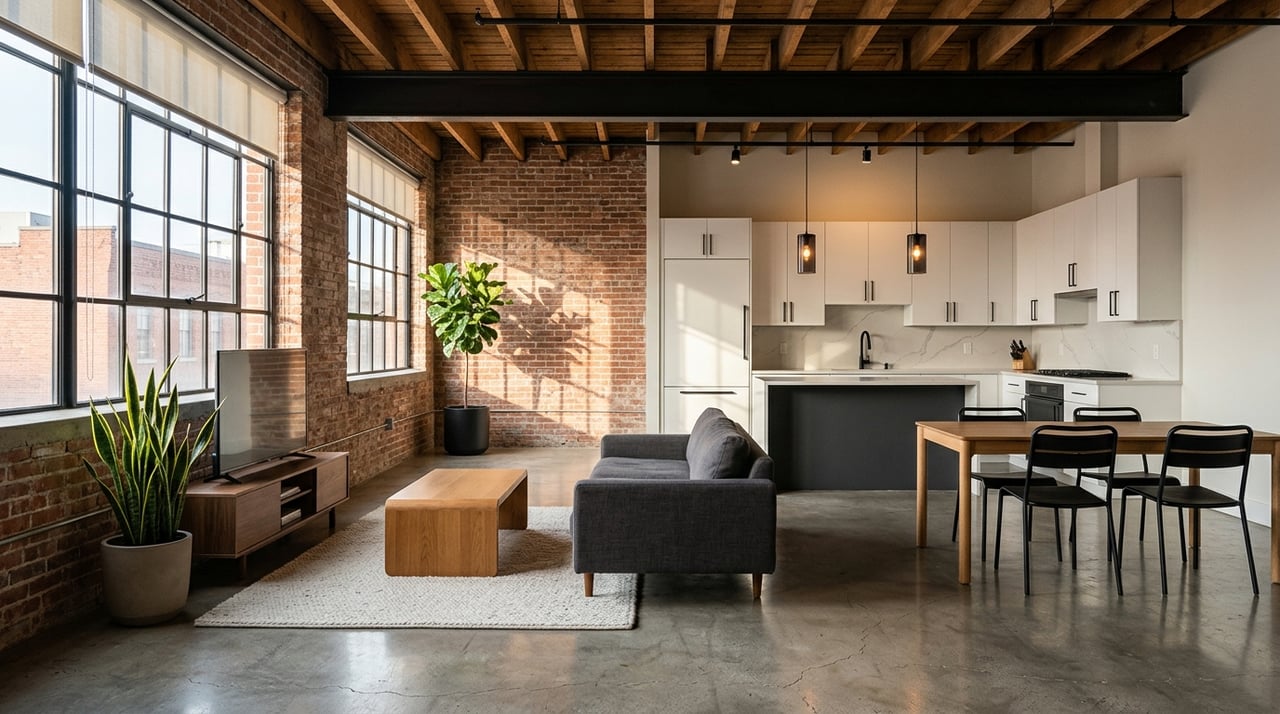
When people talk about Fulton Market loft living, they are usually talking about space, texture, and character. Representative loft properties in the area highlight exposed brick, vintage timber beams, high ceilings, skylights, and other industrial details that give these homes a distinctly old-Chicago feel.
That character can shape your routine in subtle ways. A loft often feels less compartmentalized and more open, which can make everyday living feel more flexible. Whether you work from home, host friends for dinner, or simply want a home with visual personality, loft design tends to make the space itself part of the experience.
Many lofts also offer a sense of authenticity that newer product cannot fully recreate. Features like bow-truss roofs, oversized windows, and timber construction are a reminder that these buildings were adapted rather than built to imitate an industrial style.
Lofts vs High-Rises in Fulton Market
For most buyers and renters, the big question is not whether Fulton Market is appealing. It is which version of Fulton Market fits your lifestyle better.
Lofts Prioritize Character
Lofts tend to win on architectural identity. Exposed brick, beams, and taller ceilings create a home that feels distinctive from the moment you walk in.
If your idea of city living includes design character and a little more visual warmth, a loft may feel like the better match. Many people are drawn to the volume and personality that come with repurposed industrial buildings.
High-Rises Prioritize Amenities
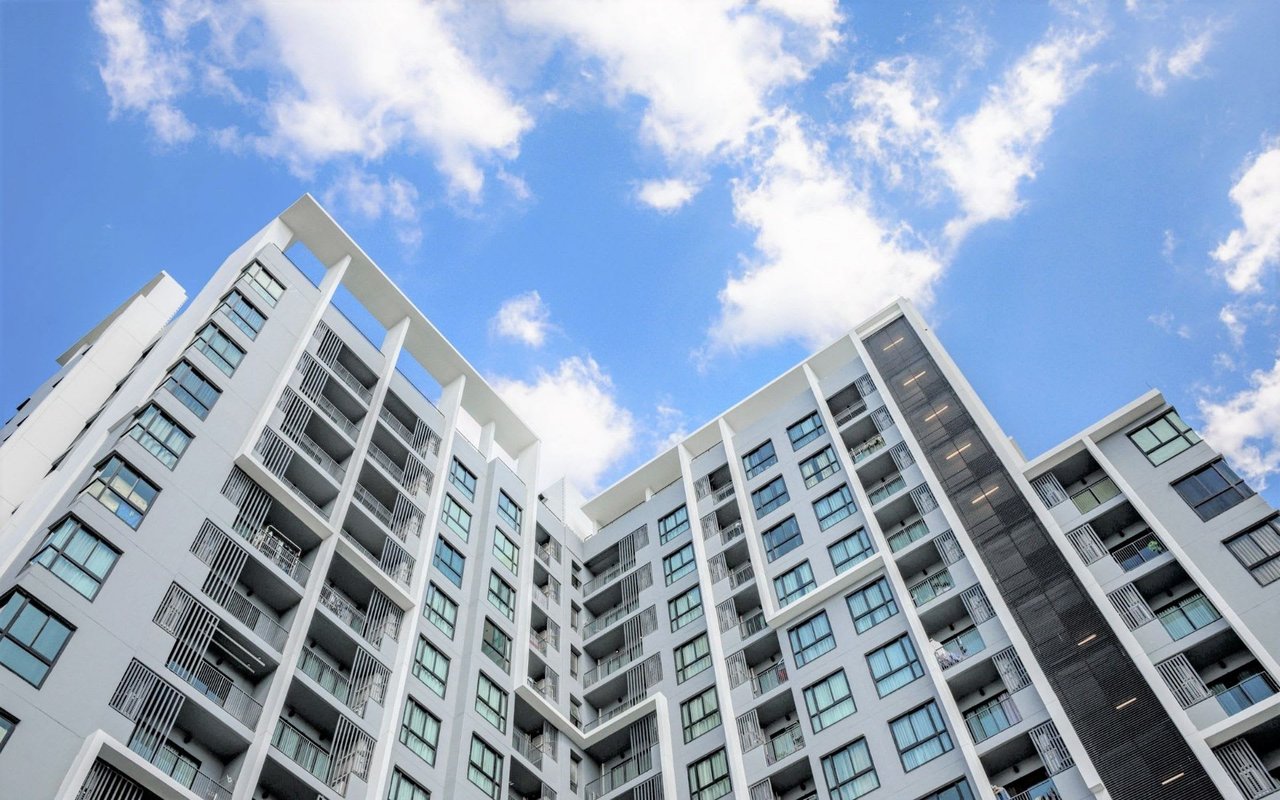
Newer high-rises in Fulton Market generally focus on convenience and shared services. Area buildings advertise features like rooftop pools, fitness centers, coworking areas, concierge or door staff, lounges, yoga rooms, business centers, and secure bike storage.
If you want a more service-oriented lifestyle, a newer tower may fit better. These buildings often make it easier to combine work, fitness, entertaining, and downtime without leaving home.
The Main Tradeoff
In simple terms, the choice is often character versus amenity density. Lofts usually give you more industrial architecture and a more distinct interior feel, while high-rises usually give you more building services and shared lifestyle spaces.
Neither choice is automatically better. The right fit depends on how you want your home to function every day.
What a Typical Day Looks Like
One of Fulton Market’s biggest strengths is that daily life can feel efficient without feeling dull. You can start the morning in a character-rich home, grab coffee nearby, commute by train or bus, and still have plenty of dining and social options close to home at night.
The neighborhood is especially well known for its food scene. Choose Chicago describes West Loop and Fulton Market as a thriving culinary destination, and the area’s own district snapshot listed more than 120 restaurants and retailers as of early 2020, up from 56 before 2017. That helps explain why the streets often stay active well beyond office hours.
Rooftop time is also part of the area’s rhythm. Whether it is a residential amenity deck or a restaurant terrace, elevated outdoor space has become part of how many residents unwind, meet friends, or break up the workday.
Getting Around Without a Car
For many residents, Fulton Market supports a car-light lifestyle. CTA’s Morgan station at 958 W Lake Street serves the Green and Pink lines and includes an auxiliary exit at Sangamon, giving the neighborhood strong train access.
Commuter rail is also close by. Ogilvie Transportation Center at 500 W Madison serves the Union Pacific Northwest line, which adds another transit option for residents who move between downtown and the broader region.
Bus access helps fill in the gaps. CTA routes 8 and 56 both serve the area, including stops near Halsted and Fulton Market and Desplaines and Fulton.
Put together, those options make it realistic for many people to handle work, errands, and nights out without relying on a car every day. That does not mean everyone will choose that setup, but the transit framework is a real lifestyle advantage.
Does Fulton Market Still Feel Historic?
Yes, and that is one of the reasons people are drawn to it. Even with ongoing development, the neighborhood remains shaped by a preservation framework that protects much of its historic fabric.
City planning and zoning materials note that the area sits within the Fulton-Randolph Market District, a Chicago Landmark District. Major demolition is subject to review by the Commission on Chicago Landmarks, which helps preserve the industrial and commercial identity that many residents value.
In practical terms, that means the neighborhood is still evolving, but not as a blank slate. New housing, adaptive reuse, and preservation are happening at the same time, which gives Fulton Market a layered feel that is harder to find in newer districts.
What the Market Context Means for You
If you are considering renting or buying in Fulton Market, current market context matters. Recent multifamily reporting from IPA says Chicago metro average effective rent rose 5.5% year over year in the second quarter of 2025.
The same report says the Loop-Fulton Market-West Loop area is expected to see fewer than 450 completions in 2025 after roughly 2,100 openings in 2024. A separate fourth quarter 2024 report said Fulton Market posted the fastest growth among Chicago submarkets, with 4,300 units added and a 5.0% increase in local stock.
The takeaway is straightforward. The neighborhood has added a lot of housing, but the pace of new supply is slowing. For you, that supports the idea that both the rental market and long-term ownership market remain active and worth watching closely.
Is Fulton Market Better for Renters or Buyers?
The area supports both. Renters benefit from a strong multifamily base, broad transit access, and a mix of loft and newer apartment options.
Buyers, meanwhile, are looking at a neighborhood that continues to attract investment and residential development. A 2024 Chicago planning document says the Fulton Market Innovation District update allows residential uses north of Lake Street and sets a 30% affordability goal for new residential projects there.
That planning direction matters because it shows the city still sees Fulton Market as an active residential district, not just an office and restaurant destination. If you are thinking long term, that continued evolution may be part of the appeal.
Who Loft Living Fits Best
Fulton Market loft living tends to work best if you value the home’s physical character as much as the neighborhood itself. If exposed brick, beams, ceiling height, and flexible open space matter to you, a loft may feel much more memorable than a polished but more standardized tower unit.
It can also be a strong fit if you want to live where the streets feel active and layered. Fulton Market offers a mix of historic architecture, destination dining, and transit convenience that supports a very urban routine.
At the same time, if your top priority is access to a pool, coworking lounge, door staff, and a more service-heavy building experience, a newer high-rise may check more boxes. The key is being honest about how you want to live day to day.
If you are weighing loft living against newer construction in Fulton Market, a clear strategy makes a big difference. Luke Sandler brings a concierge-style, neighborhood-savvy approach to buying, selling, and leasing in central Chicago, helping you compare character, convenience, and long-term fit with confidence.
FAQs
What does loft living in Fulton Market usually include?
- Loft living in Fulton Market often includes industrial features such as exposed brick, timber beams, skylights, and higher ceilings that reflect the neighborhood’s warehouse and commercial past.
Can you live in Fulton Market without a car?
- For many residents, yes. The neighborhood has CTA rail access at Morgan, nearby Metra service at Ogilvie, and CTA bus routes that support commuting, errands, and going out.
What is the difference between Fulton Market lofts and high-rises?
- The main difference is lifestyle focus. Lofts usually emphasize character and architecture, while high-rises usually emphasize amenities like pools, fitness centers, coworking space, and concierge service.
Does Fulton Market still have a historic feel?
- Yes. The neighborhood includes the Fulton-Randolph Market District, a Chicago Landmark District, and preservation review helps protect much of its historic industrial character.
Is Fulton Market a good area for renters and buyers?
- Both groups stay active here. The rental market has strong momentum, and city planning continues to support new residential development and adaptive reuse in the area.
Why do so many people choose Fulton Market for daily life?
- Many people are drawn to the mix of transit access, dining options, preserved architecture, and a range of housing choices from lofts to newer amenity-rich buildings.