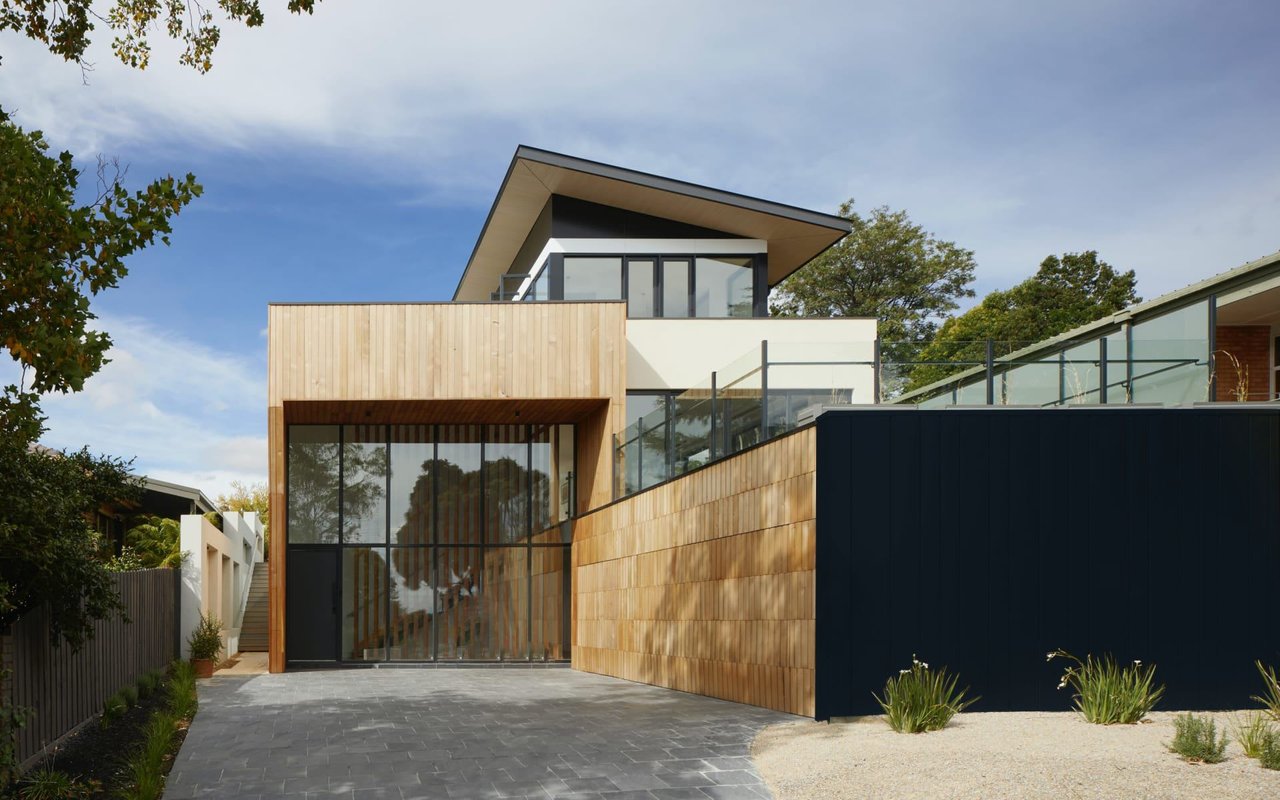
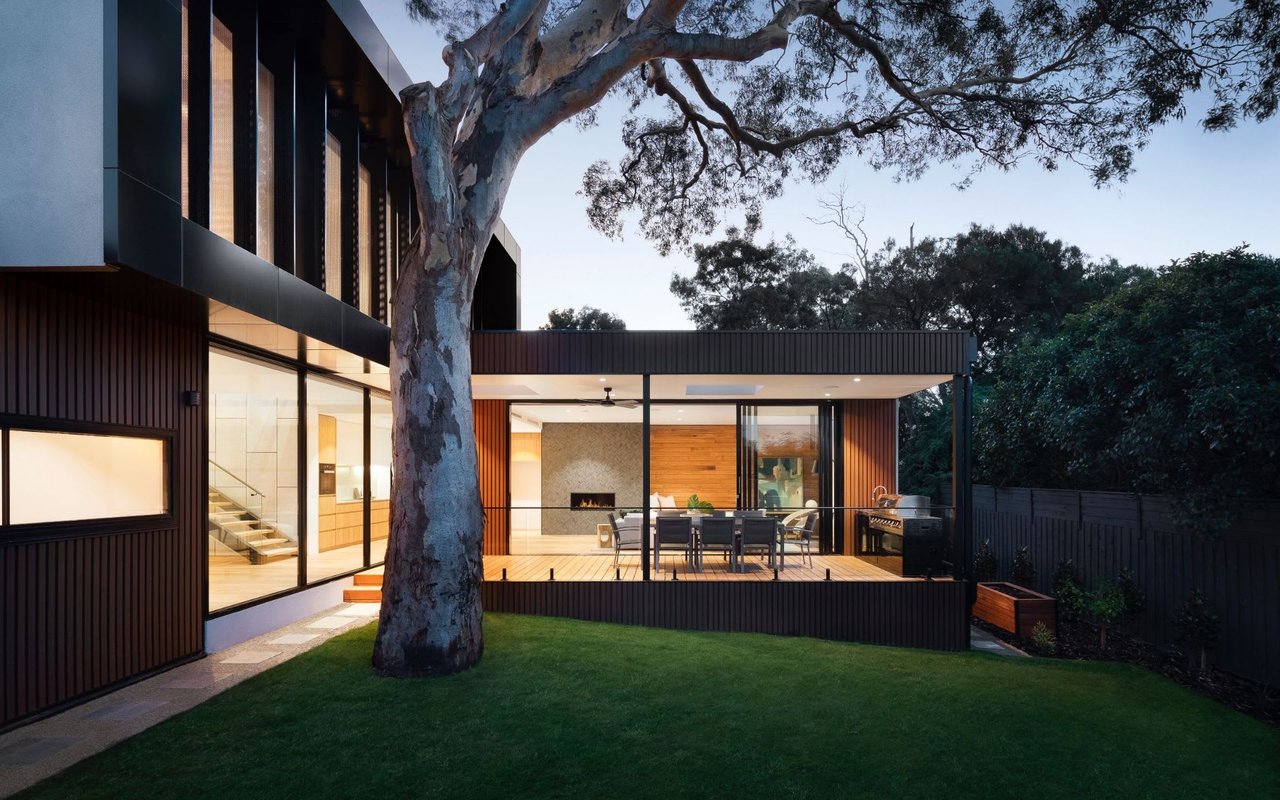
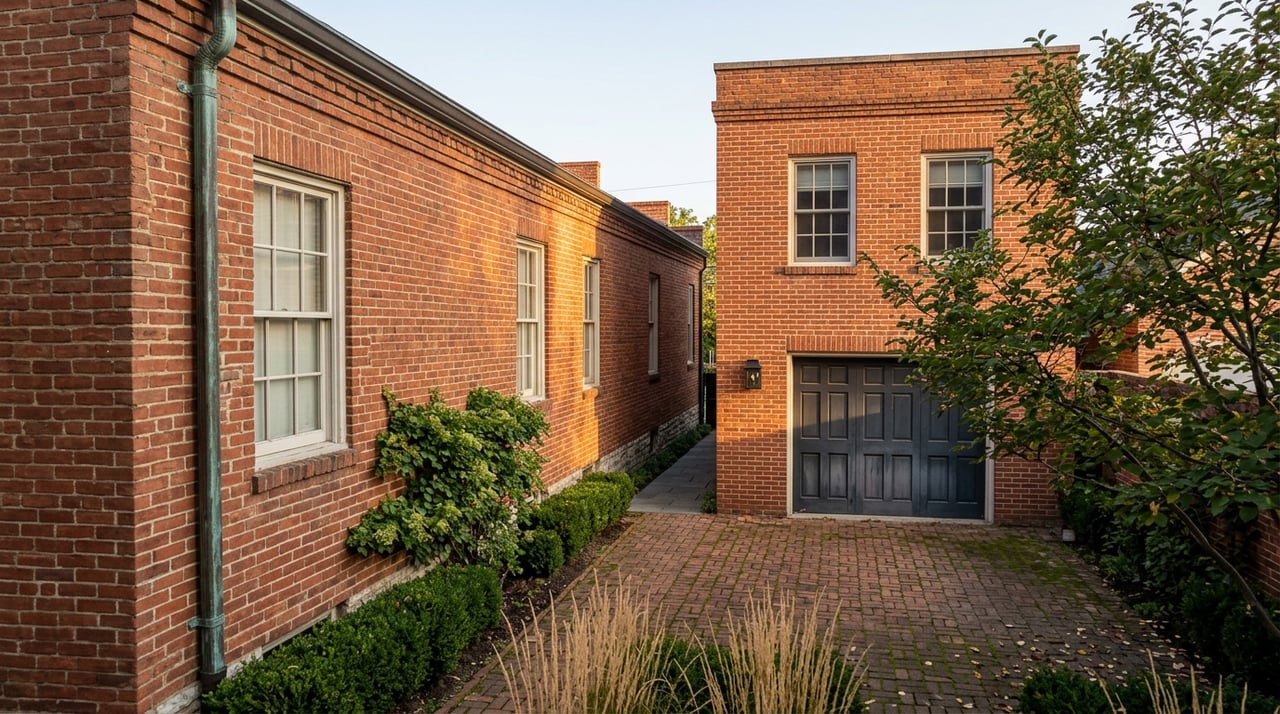
Telang wanted to build a coach house for family in his backyard. He'd waited years for Chicago to open that door, and when the City Council finally passed the ordinance last fall, he figured the hard part was over. It wasn't. There was no single place to check what his own address was actually allowed to do. So he built one himself: a site called aduchecker.com where anyone can type in an address and see the answer. As he told Block Club Chicago, it takes a significant amount of time for you to figure out.
That's the real story behind Chicago's new accessory dwelling unit ordinance, and it matters if you're comparing properties anywhere in the city right now. The headlines all said the same thing: ADUs are legal citywide as of April 1, 2026. That's true, and also the least useful sentence in the whole policy. Whether a specific two-flat, single-family home, or small apartment building can actually add a coach house or a basement apartment depends on which zoning district it sits in, and for a huge share of Chicago's housing stock, on whether that block's own alderperson signed off. Two houses a few blocks apart, similar size, similar lot, can land on opposite sides of that line.
What changed on April 1, and what didn't
Chicago banned coach houses and secondary units in 1957 through zoning rules that added parking requirements and prohibited standalone rear structures. That stood for almost 70 years. In 2021, the city opened a narrow pilot: five test zones on the North, Northwest, West, South, and Southeast sides, covering roughly 12 percent of Chicago. Over the next four years, that pilot produced around 400 permitted ADUs, about 22 percent of them coach houses, the rest interior conversions of basements and attics.
On September 25, 2025, the City Council voted 46 to 0 to pass Ordinance SO2024-0008918, converting that pilot into a permanent citywide program effective April 1, 2026. The eligible footprint grew from about 116,000 parcels to more than 320,000, roughly 60 percent of the city. That's a real expansion. It's also not the same as saying every lot in Chicago can now add a unit.
The zoning line that matters more than your ZIP code
The ordinance splits Chicago's housing stock into two very different situations.
| Zoning district |
ADU status after April 1, 2026 |
Who decides |
| RT (two-flat, townhouse, multi-unit) and RM (multi-family) |
Allowed by right, citywide, except downtown |
No aldermanic approval needed |
| RS (single-family) inside one of the five original pilot areas |
Allowed, continuing under the terms set in 2021 |
Already decided |
| RS (single-family) outside the pilot areas |
Allowed only where the alderperson has opted the block in |
The local alderperson, block by block |
| Downtown zoning districts |
Not eligible |
Not applicable |
If you're looking at a two-flat or a small multi-unit building almost anywhere in the city outside downtown, the ADU question is settled. It's allowed. If you're looking at a single-family house, the answer depends entirely on geography that has nothing to do with the building itself.
The compromise that built the patchwork
The single-family carveout exists because the ordinance almost didn't pass. Ald. Bennett Lawson's original proposal would have opened roughly 61 percent of the city to ADUs. Ald. Marty Quinn's counterproposal capped it at about 20 percent, citing concerns about density and neighborhood character. The version that actually passed split the difference by handing single-family zones to individual alderpeople, ward by ward, block by block.
As of July 2026, 34 of the city's 50 wards had opted some or all of their single-family blocks in, according to tracking published by Chicago Cityscape, which maintains the city's ADU eligibility lookup tool. That number keeps moving. Any alderperson can introduce an ordinance to open new blocks, and Council approved one such expansion in February 2026 covering sections of the 5th, 31st, 34th, and 36th wards. The reverse is also true: an alderperson can pull blocks back out.
Even where a ward has opted in, the rules aren't uniform. Alderpeople can cap how many ADU permits get issued per block each year, three per year in RS-3 zones, two in RS-2, one in RS-1, the same limits that already applied in three of the five original pilot areas. They can require owner-occupancy. They can require an administrative adjustment, a separate zoning review with a filing fee that adds time before a permit application even gets submitted.
Cook County Assessor Fritz Kaegi has weighed in on one piece of the financial picture that tends to worry neighbors: adding an ADU will not cause higher assessments for neighbors who have not built ADUs. The property that adds the unit does typically see its own assessed value rise, since a detached house that gains an interior ADU can shift classification to a two-flat. The city's Home Improvement Exemption can shield a portion of that added value from reassessment for up to four years, but it has to be applied and confirmed with the Assessor's office rather than assumed.
The friction points that show up during due diligence
A few mechanics catch people off guard once they get past the zoning question.
Interior conversions, basement and attic units, require the existing building to be at least 20 years old. Coach houses have no age requirement at all, so a newer building can still add a detached rear unit even if it can't legally convert its basement.
Coach house construction now requires a contractor enrolled in a federally registered apprenticeship program through the U.S. Department of Labor. As of late 2025, only around two dozen Chicago-area firms met that requirement, which narrows the contractor pool for anyone planning a new detached structure. The requirement does not apply to interior conversions.
Every ADU built under the ordinance is barred from short-term rental use. Anything under 30 days is off the table, so an investor modeling Airbnb income on a new coach house is modeling a plan the ordinance doesn't allow.
Once a property has two or more ADUs, an affordability rule kicks in: at least half of those units, rounded down, have to rent at rates affordable to households earning 60 percent of area median income. That threshold only applies at the two-unit mark and above, so a single coach house or a single basement conversion doesn't trigger it.
Cost ranges vary by scope. A new coach house typically runs $150,000 to $350,000 or more depending on size and finish. An interior basement or attic conversion is cheaper, generally $65,000 to $120,000. Processing a permit application typically takes four to six months, and construction adds another four to ten months depending on the project, so the full timeline from decision to move-in ready unit is closer to a year than a season.
There's one more piece worth knowing if you're looking at an older two-flat or three-flat with a basement unit that's already rented but was never permitted. The ordinance creates a formal pathway to legalize exactly that kind of existing unpermitted space, which is common in a city with as much old multi-unit housing stock as Chicago has. That's a different process than adding a brand-new unit, but it's now on the table in a way it wasn't before April 2026.
What this means if you're comparing properties
If you're weighing a single-family house against a two-flat, or comparing two houses in different parts of the city, the "Chicago legalized ADUs" headline tells you almost nothing about either specific property. The building's zoning classification and, for single-family lots, the ward's opt-in status and block restrictions are what actually determine whether that basement or backyard represents real rentable square footage or just square footage.
Before you assume a listing's ADU potential is part of the deal, check the property directly. The city's Additional Dwelling Unit Areas map on the Chicago data portal and Chicago Cityscape's property lookup tool both let you search a specific address rather than guess from a ward-level headline. For anything in a single-family zone, a call to the alderman's office confirms current block caps and occupancy requirements before those assumptions go into an offer.
That's exactly the kind of property-specific homework worth doing with someone who tracks this market daily, whether you're comparing a two-flat's rental math against a single-family lot's ADU upside, or trying to figure out what a specific address in a specific ward can actually do. If you're weighing that decision right now, Luke Sandler can help you compare the numbers on the properties you're actually considering.
Quick FAQ
Does adding an ADU raise my property taxes? The property that adds the unit typically sees its assessed value increase, since the added square footage and change in property classification factor into the county's appraisal. The Home Improvement Exemption can shield part of that increase from reassessment for up to four years, but it needs to be applied for and confirmed with the Cook County Assessor's office.
Can I rent my ADU on Airbnb? No. The ordinance restricts every ADU built under it to long-term rental use only, meaning stays of 30 days or longer.
Do I need to live on the property to add an ADU? It depends on zoning and location. Multi-unit buildings in RT and RM zones generally have fewer owner-occupancy restrictions. In the West, South, and Southeast pilot areas, owner-occupancy is required for properties with one to three units. In other wards that have opted single-family zones in, the requirement is set by that alderperson and varies block to block.