If you are thinking about living in Chicago without a car, you are not chasing a fantasy. In the city’s core neighborhoods, many people build daily routines around trains, buses, walking, and bikes instead of parking, traffic, and car payments. If you want to know where that lifestyle works best and what to look for before you move, this guide will help you narrow in on the right fit. Let’s dive in.
Why car-free living works in Chicago
Chicago’s core stands out because the transit network is broad enough to support real daily life. CTA operates 8 rail routes, 127 bus routes, and 146 stations, with about 1.04 million weekday rides systemwide. That kind of reach gives you more than one way to get where you need to go.
Fares also help make a car-free routine more practical. CTA allows up to two additional rides within two hours at no extra charge, which can make mixed trips easier when your day includes a train, a bus, and a stop in between. For many city residents, that makes errands, work, and social plans easier to stack into one day.
The biggest advantage is service frequency on the right lines. The Red Line and Blue Line run 24 hours a day, while the Brown, Green, Orange, and Pink lines run from early morning to late evening. Purple Line local service also runs early morning to late evening, while Purple Line Express is weekday rush-period service only.
That matters more than many buyers first realize. If you travel late, commute early, or fly often, living near the Red or Blue Line can make your week much smoother. It is not just about being near transit. It is about being near the transit that matches your routine.
The second layer: bikes and walking
A strong car-free setup in Chicago usually is not rail alone. It is rail plus walking plus bike access. That combination is one reason downtown and nearby neighborhoods can feel so manageable without a car.
Divvy operates across Chicago and Evanston with more than 600 stations. The city also has more than 210 miles of bike lanes and more than 15,000 bike racks. In practical terms, that means many short trips can be handled with a walk to the station, a quick bike ride, or both.
For you, that can change how you think about distance. A grocery run, workout class, dinner reservation, or coffee meeting may not need a car at all if your building sits near a station and a Divvy dock. In the right neighborhood, short trips become simpler than driving.
River North and Near North Side
River North and the broader Near North Side are among the easiest places in Chicago to live without a car. The area is dense, active, and built around everyday movement on foot. You have a strong mix of restaurants, retail, offices, and public spaces, including the Chicago Riverwalk.
Transit is a major reason this area works so well. The Chicago Red Line station at 800 N. State St. and the Grand Red Line station at 521 N. State St. place you on a direct downtown rail corridor. That setup gives many residents a simple transit backbone for work, errands, and nights out.
If your goal is to reduce friction in your day, this area checks many boxes. You can often choose between walking, rail, and buses instead of defaulting to a car. For buyers who want a short commute and easy access to central Chicago, River North and Near North Side are strong places to start.
West Loop and Fulton Market
West Loop and Fulton Market are some of the strongest car-light neighborhoods in the city. The area blends dense dining and entertainment with practical transit access, which is a big reason so many urban buyers focus here. If you like a walkable routine that flows from work to dinner to home, this part of Chicago often delivers.
CTA’s Morgan station serves the Green and Pink lines and was opened to serve the growing West Loop area. Clinton Blue Line adds another important layer because it connects to Union Station, Metra, Amtrak, and several CTA bus routes. That mix makes the neighborhood especially useful if your travel patterns go beyond one part of the city.
Regional connections matter more than people expect. Metra’s Ogilvie Transportation Center connects to CTA Green and Pink lines plus multiple bus routes, and Millennium Station connects to CTA Green, Pink, Orange, Brown, and Purple lines plus several bus routes. If you need to move around the city and beyond it, West Loop gives you a flexible home base.
This is one of the best fits for buyers who want to be highly mobile without owning a car. Between trains, walking, and nearby regional connections, many trips become easier to plan than in lower-density areas. That can be a major quality-of-life upgrade.
Lincoln Park for car-light living
Lincoln Park offers a different version of the car-free equation. It is more residential and park-oriented, but it is still very workable if you want to rely less on a car. For many buyers, it feels less fully transit-first than River North or West Loop, but still highly functional.
The neighborhood is anchored by Fullerton on the Red, Brown, and Purple lines, Armitage on the Brown and Purple lines, and Diversey on the Brown and Purple lines. Armitage also has sheltered bike parking. Those station options support commuting while still giving you the neighborhood feel many buyers want.
Lincoln Park also stands out for daily quality of life. The neighborhood includes access to the lakefront green space, Lincoln Park Zoo, Lincoln Park Conservatory, the Lakefront Trail, and North Avenue Beach. If you want a balance of transit, walkability, and open space, Lincoln Park deserves serious consideration.
What to look for in a building
When you are shopping for a home, the neighborhood matters, but the building matters just as much. The best car-free setup depends on how your front door connects to your daily routine. A great address on paper may still be inconvenient if the station walk is longer than expected or if your commute depends on limited service hours.
Start with station walk time. A short, easy walk to the train often matters more than being in a trendy pocket of a neighborhood. If you expect to use transit every day, convenience adds up fast.
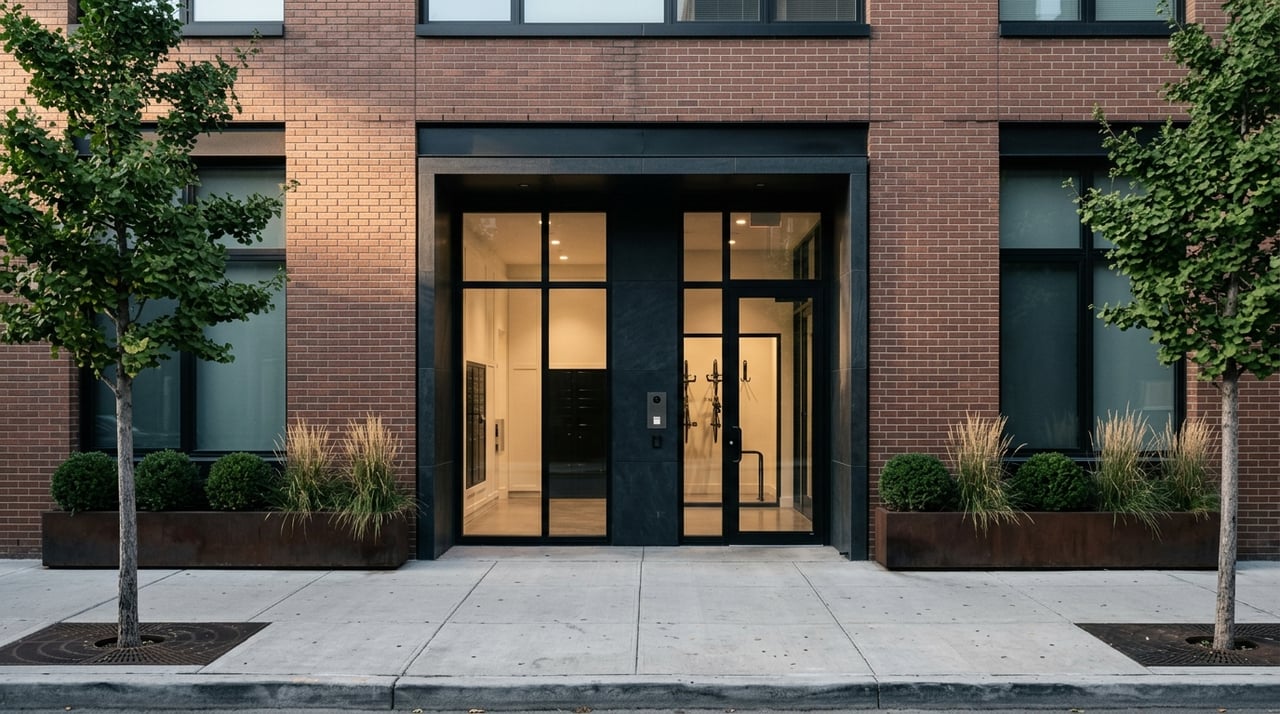
Next, look at bike storage. CTA station pages show indoor or sheltered bike parking at several central stations, including Armitage, Grand Blue, Chicago Blue, and Clinton Blue. If you plan to combine train trips with biking, that feature can make your routine much smoother.
Accessibility should also be part of your search. CTA’s accessible-stations list includes many important core stops, including Fullerton, Armitage, Diversey, Chicago, and Clark/Lake. CTA also advises riders to check system status because elevator notices and temporary service changes can affect travel.
Finally, pay close attention to service patterns. If you need late-night flexibility, a home near the 24-hour Red or Blue Line may be a better fit than one that depends on Brown, Green, Pink, or Purple service windows. This is one of the clearest examples of why building-level advice matters.
Matching the neighborhood to your routine
The best car-free neighborhood is not the same for everyone. Your ideal setup depends on where you work, when you travel, and how you spend your free time. A great move is not just about choosing the most popular neighborhood. It is about choosing the one that fits your actual week.
If you want the strongest overall car-free setup, West Loop/Fulton Market and River North/Near North Side usually rise to the top. They combine dense daily destinations with multiple transit choices. That gives you flexibility when your schedule changes.
If you want more of a neighborhood feel with strong transit support, Lincoln Park may be a better match. It can be an excellent car-light choice for buyers who value parks, local errands, and access to the lakefront. For some buyers, that tradeoff is worth more than being closest to the downtown grid.
This is where local guidance can save you time. A buyer who flies often may want easy access to the Blue Line. Someone who works downtown and walks most evenings may prefer River North. Someone who wants park access and a more residential rhythm may lean Lincoln Park.
Luke Sandler’s value in this search is helping you match buildings to routines, not just maps. Whether you are buying a condo, leasing in the core, or comparing neighborhoods block by block, that kind of local knowledge can help you spot the difference between a place that sounds convenient and one that truly works every day.
If you want help narrowing down buildings that support a real car-free or car-light lifestyle in Chicago, connect with Luke Sandler. You will get neighborhood insight, responsive guidance, and a more strategic way to search.
FAQs
Which Chicago neighborhood is best for living without a car?
- West Loop/Fulton Market and River North/Near North Side are usually the strongest overall choices because they combine dense daily destinations with multiple transit options.
Is Lincoln Park a good neighborhood for car-free living in Chicago?
- Yes. Lincoln Park is a strong car-light option with access to the Red, Brown, and Purple lines, plus bike infrastructure and lakefront amenities.
What CTA lines matter most for a car-free lifestyle in Chicago?
- The Red Line and Blue Line are especially important because they run 24 hours a day, which helps with late-night trips, early commutes, and airport access.
What should you look for in a Chicago building if you do not plan to own a car?
- Focus on station walk time, bike storage, elevator access, and whether your daily routine depends on 24-hour Red or Blue Line service.
Can you rely on biking as part of car-free living in central Chicago?
- Yes. Divvy has more than 600 stations, and Chicago has more than 210 miles of bike lanes and more than 15,000 bike racks, which supports short trips and station connections.